

Flat Roof Repair
Repairing flashing, seams, punctures, and localized membrane problems can sometimes extend a roof’s useful life.
Learn about this serviceFLAT ROOFING · ABILENE, TX
Explore common low-slope roofing service types and what to ask a roofing provider before scheduling an inspection.
Call Today for Flat Roofing ServicesRepairing flashing, seams, punctures, and localized membrane problems can sometimes extend a roof’s useful life.
Learn about this service
When recurring leaks or deteriorated materials make repairs impractical, a full replacement may offer a better long-term solution.
Learn about this service
Flat-roof installation depends on correct slope, compatible materials, drainage, and carefully detailed penetrations.
Learn about this service
A condition assessment can identify visible membrane wear, flashing problems, ponding water, and potential moisture entry points.
Learn about this service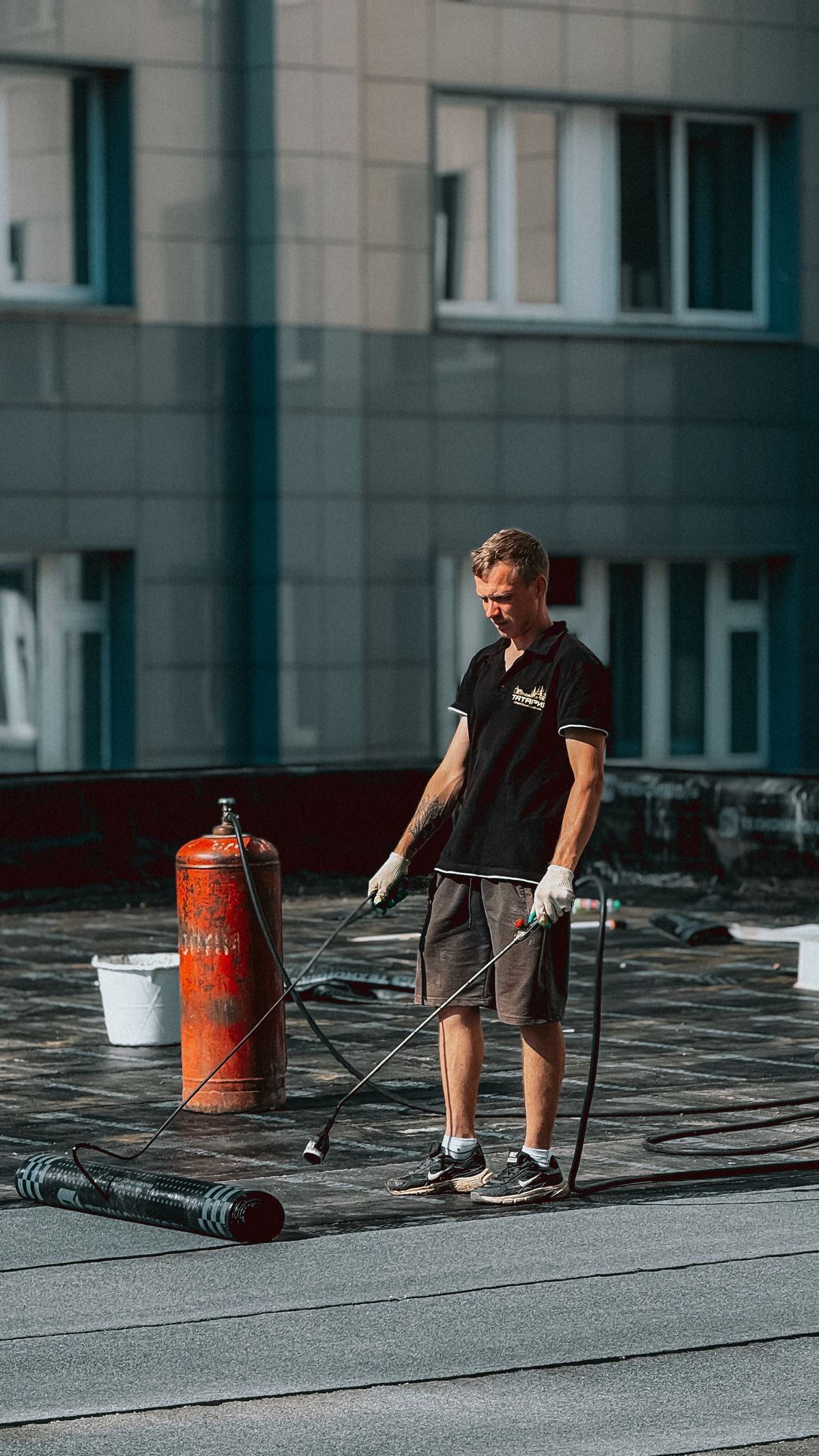
Routine checks and debris removal help owners monitor roof condition and address minor problems before they spread.
Learn about this serviceUrgent roof leaks and storm damage may need temporary mitigation followed by a professional assessment.
Learn about this serviceFinding the source of a roof leak often requires tracing water pathways beyond the location of the interior stain.
Learn about this serviceLow-slope commercial roofs need planned access, appropriate membranes and drainage to protect occupied buildings.
Learn about this serviceResidential low-slope sections over additions, porches, and modern homes require roof systems suited to limited pitch.
Learn about this serviceThermoplastic polyolefin (TPO) is a single-ply membrane often used on commercial low-slope roofing.
Learn about this serviceEPDM is a synthetic rubber membrane used for low-slope roofs, typically with system-specific seams and flashings.
Learn about this servicePVC single-ply roofing is used on certain low-slope buildings and requires compatible membrane and heat-welded details.
Learn about this serviceModified bitumen systems use asphalt-based membranes that may be installed with different methods.
Learn about this serviceBuilt-up roofing (BUR) consists of layered bituminous materials used on many established low-slope roofs.
Learn about this serviceRoof coatings may help protect compatible existing surfaces, but cannot substitute for correcting wet insulation or structural defects.
Learn about this serviceMetal roof systems require attention to expansion, fasteners, seams, penetrations and correct water-shedding design.
Learn about this serviceLow-slope roofs rely on properly functioning drains, scuppers, gutters and positive drainage.
Learn about this serviceWind, hail and heavy rain can affect roof membranes, edge metal, flashings and exposed equipment penetrations.
Learn about this serviceDiscuss your roof concern and request a connection with an independent local roofing provider. Availability and estimates are set by the provider.